Overview
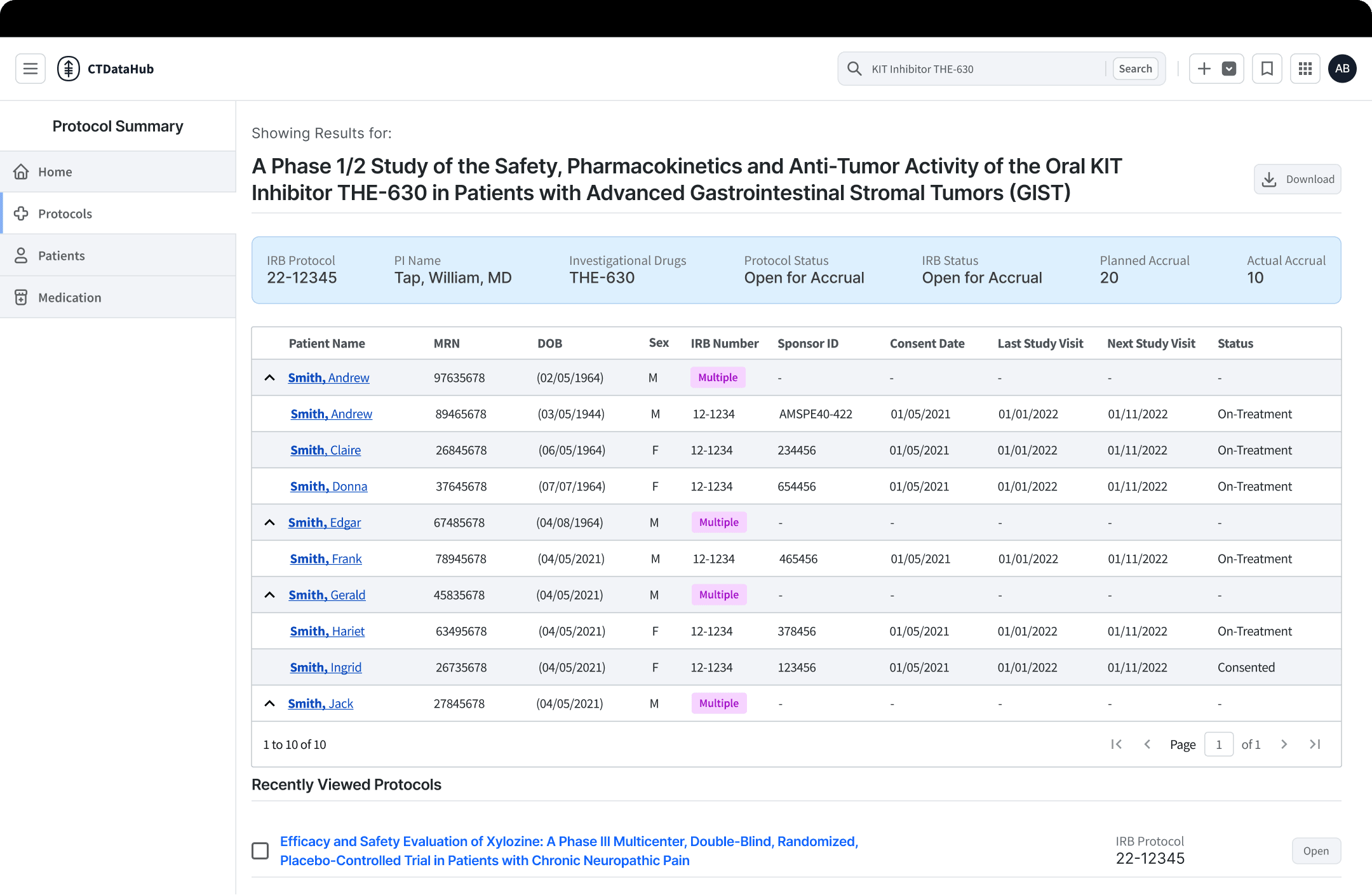
CTDataHub is a centralized workspace that extracts and consolidates patient health and medication data from the EHR and displays it in a user-friendly, automated, and consolidated view. As the visual designer on the project, I led the UI from concept to polished component library, working alongside the team to synthesize research findings into a dashboard nurses could actually trust.
Role
Visual Designer
Timeline
2022–2023
Team
Product · Engineering · Clinical stakeholders
Scope
Visual design · Component architecture · Research synthesis
Problem Statement
Current manual data abstraction workflows were keeping MSK staff from more important aspects of clinical care and creating a financial burden on the facility.
Root Causes
No single source of truth Patient data lived across multiple disconnected systems and departments — making it nearly impossible to surface the right information quickly, or report it back to trial sponsors on time.
Data staff couldn't fully trust Without standardization, clinical staff routinely double-checked their own work — waiting for a colleague to confirm what they were seeing before acting on it, adding delays that compounded across every shift.
Automation opportunities going unused High-value signals like Serious Adverse Events could have been surfaced automatically. Instead, staff were manually scanning records to find them.
The wrong people doing the wrong work Senior clinical staff were spending a measurable portion of their shifts on manual data retrieval — time that should have gone to patient care, coordination, and support.
Qualitative Research
I sat in on 6 one-hour, semi-structured interviews with clinical staff — observing workflows, noting friction points, and synthesizing findings into design direction. I didn't lead the research, but the sessions gave me direct access to the language and mental models I needed to make the right visual decisions.
“It would be great to see all of this information in one place, especially with the medications — because that's something that manually takes an incredible amount of time to go through every single EMR document to see when the patients started this medication.”
— Kalista, Clinical Research Coordinator
“Some patients can have like 25 adverse events and 100 medications and we have to look through every document. I was definitely overwhelmed the first time I logged into CTMS. I wish there was a simpler solution because there is a lot of information in here that isn't relevant for us.”
— Anmol, Clinical Research Coordinator
Key Insight
Consolidation was the feature. Every other design decision flowed from getting Adverse Event and medication data into one place.
Business Goals
Increase the rate at which the correct data was identified by 50%
Decrease the time required to identify the correct data by 50%
Decrease the perceived difficulty of identifying the correct data by 30%
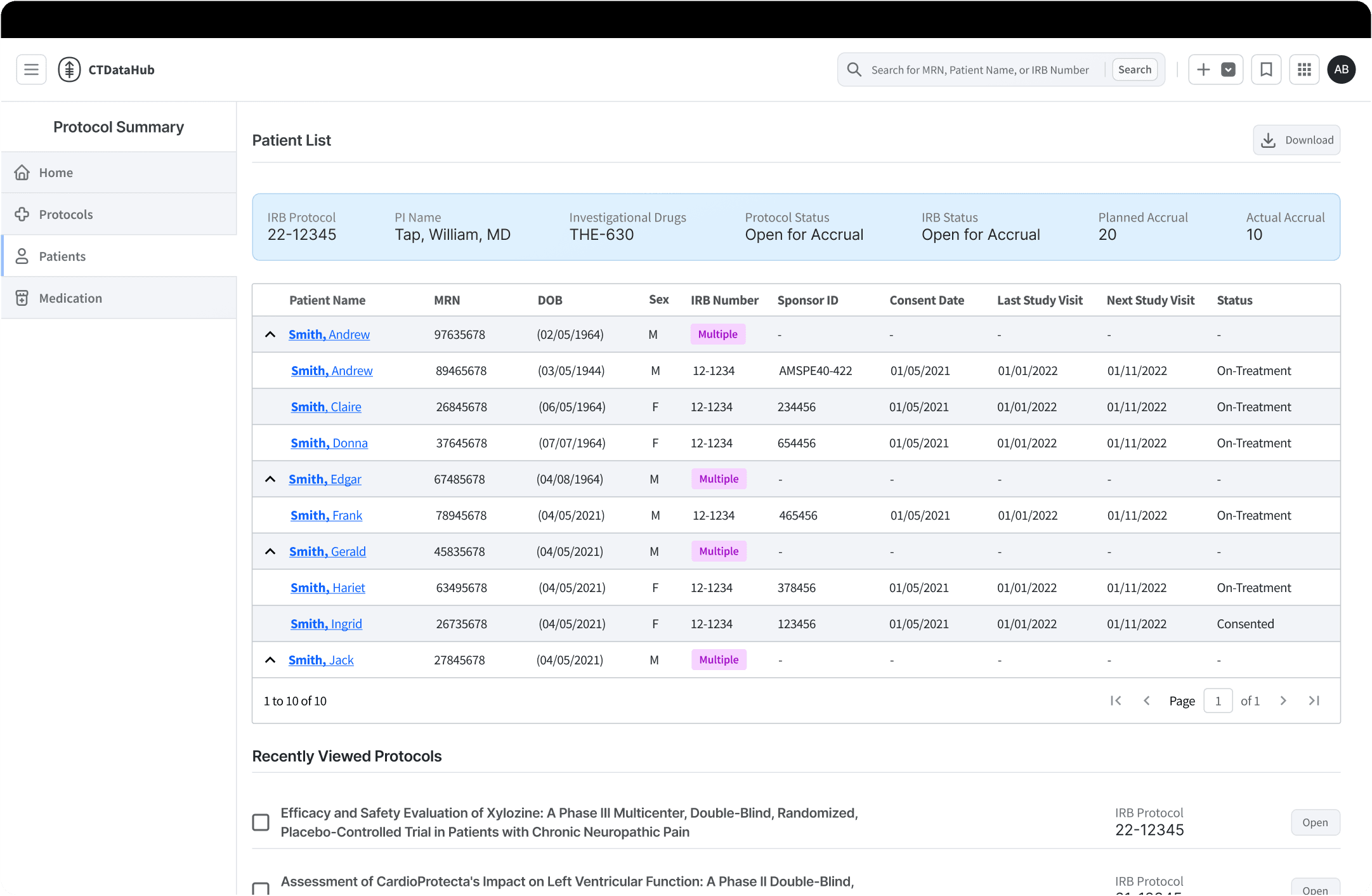
The Challenge
Nurses had no single source of truth. Critical patient data was scattered across multiple systems — each with its own navigation model and terminology. The cognitive overhead of context-switching was measurable: time lost, details missed, and a workflow that asked nurses to do too much remembering and not enough caring. The wireframes below were the starting point — a rough structural foundation that mapped the data hierarchy before any visual decisions were made.
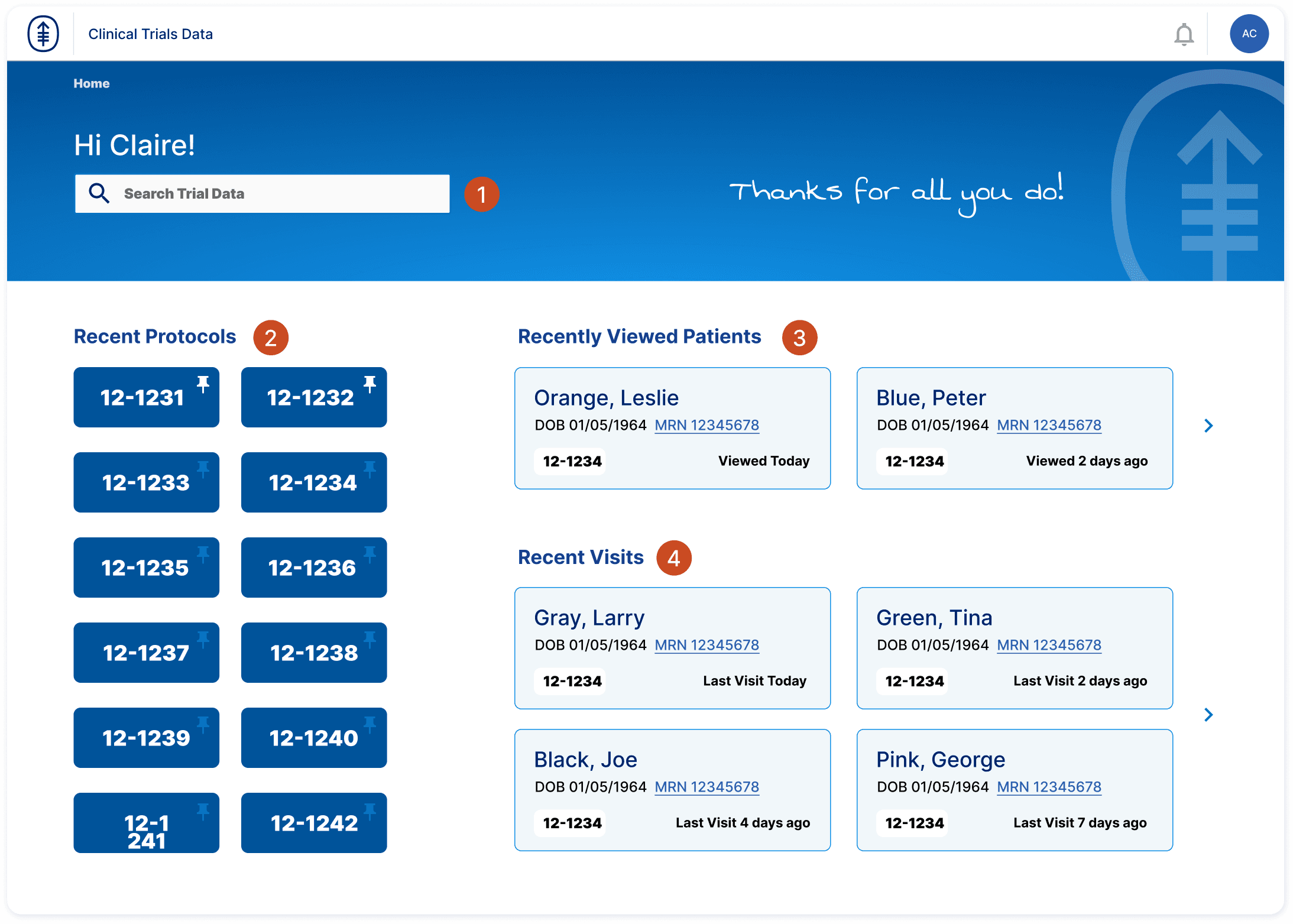
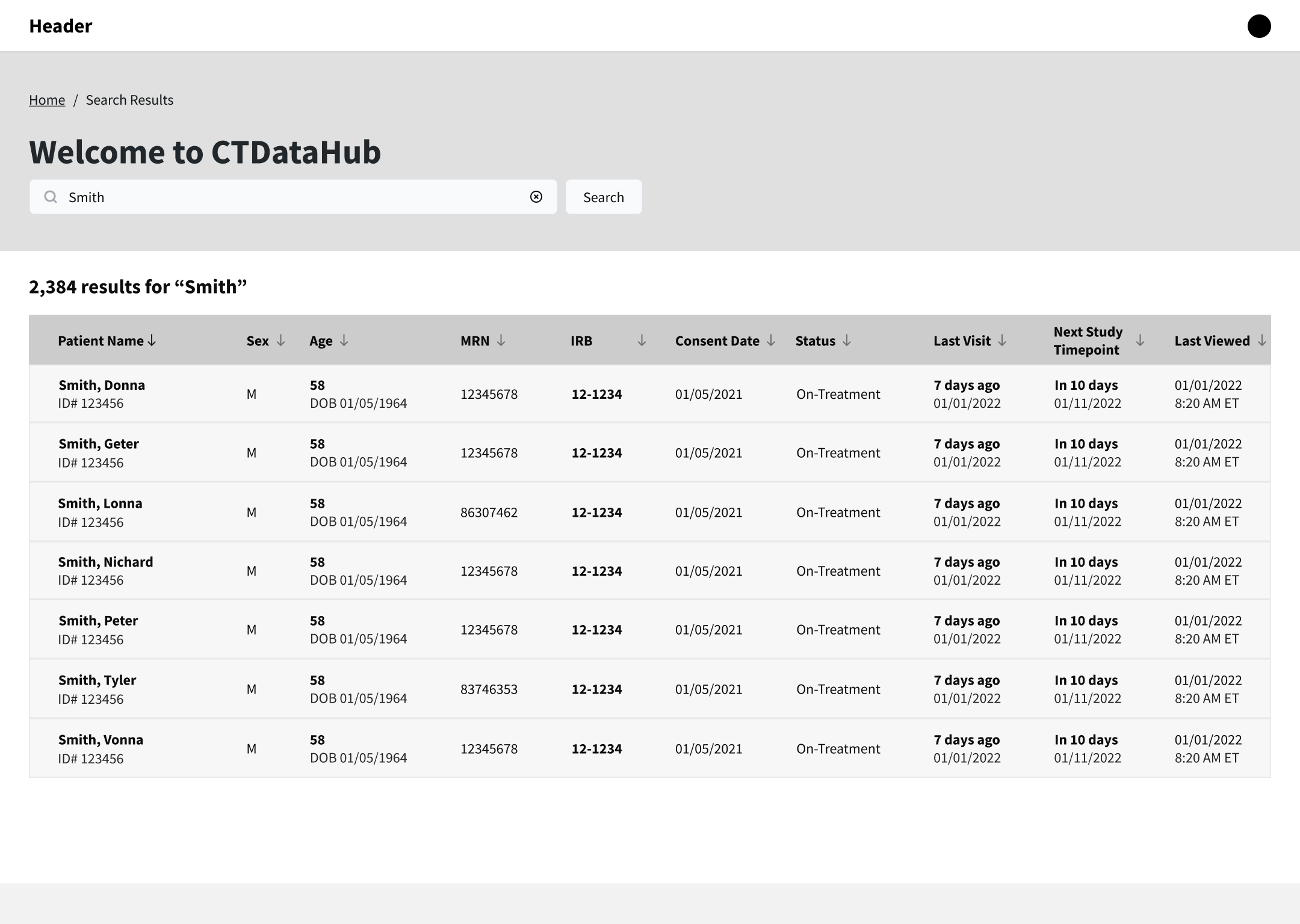
Process
I synthesized findings from clinical staff interviews to map the highest-frequency tasks and the specific data points nurses referenced most. From there I led the visual design and component architecture — building a system that could handle high information density without overwhelming the user, and that could absorb new data sources without requiring a redesign.
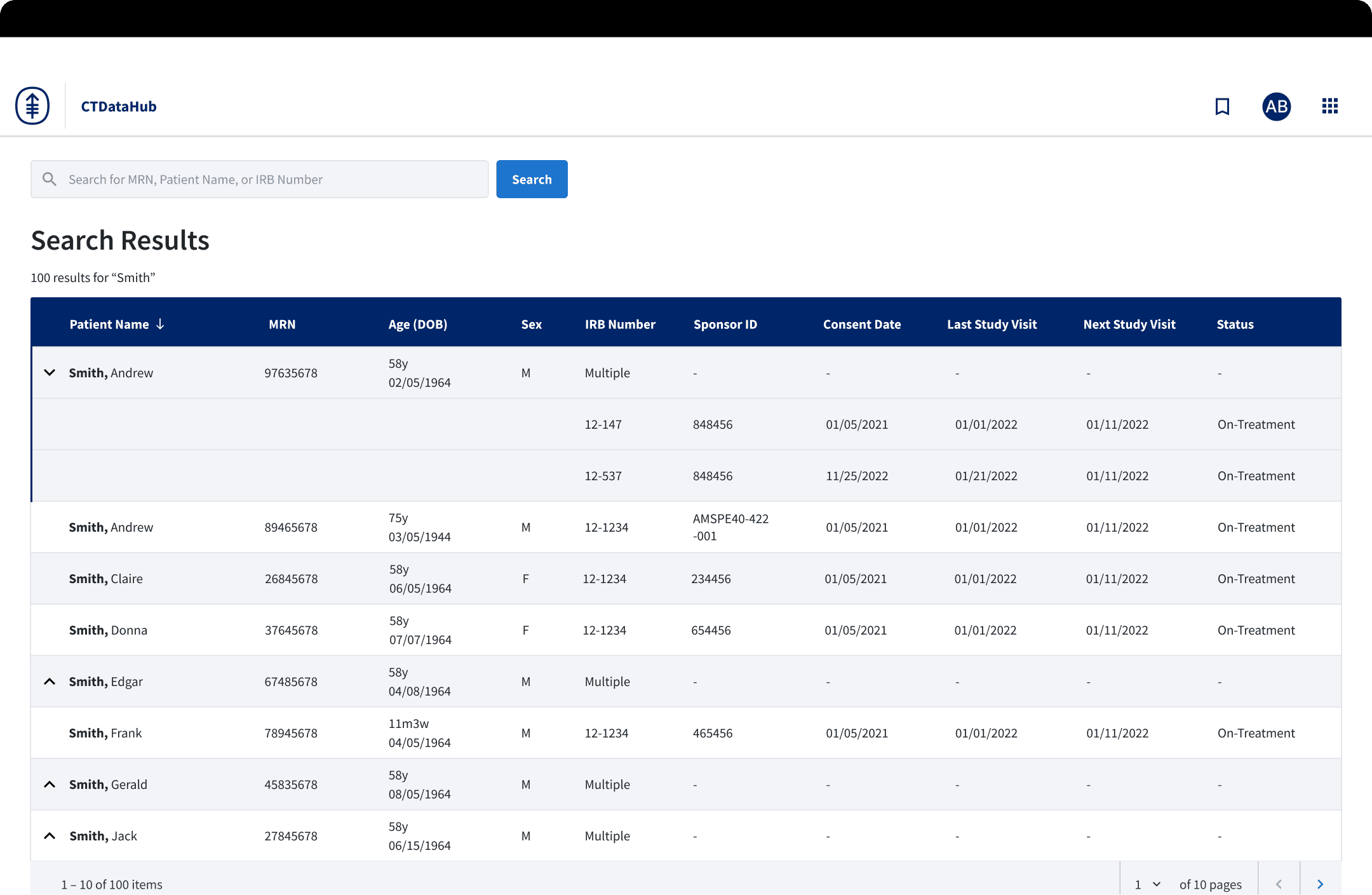
Outcome
By aggregating patient health and medication data from the EHR into a single consolidated view, CTDataHub reduced the time nurses spent locating critical information by approximately 40% — turning a fragmented, multi-system workflow into a single source of truth.